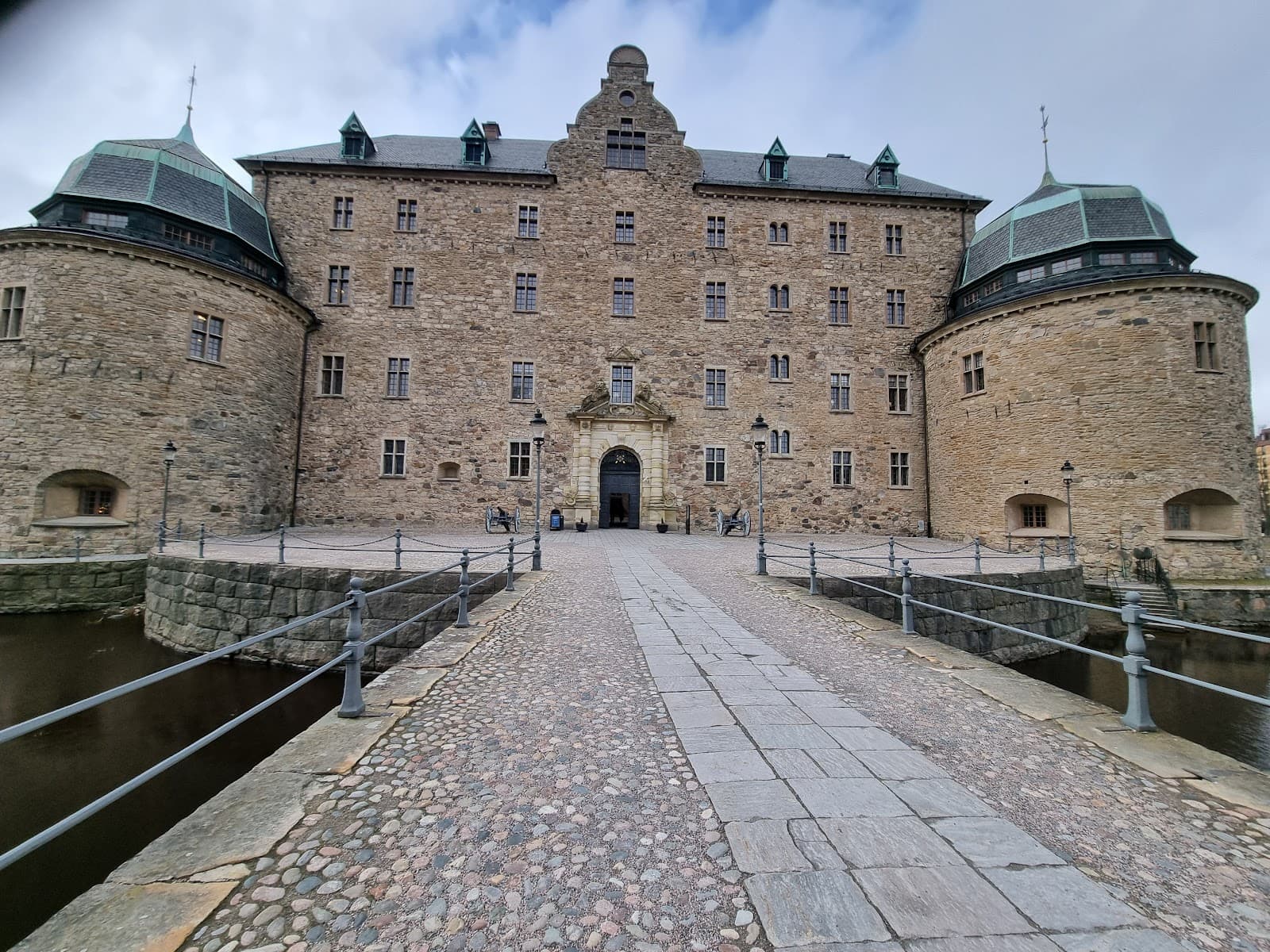
A Living Historical Landmark
Örebro Castle, elegantly situated by the tranquil waters of Svartån, reflects centuries of architectural evolution and historical significance. Its imposing silhouette has shaped the city's character, holding a rich narrative of both political upheavals and advancements in construction. Approaching the castle, whether through the lush City Park or the charming cobblestone streets of the city center, is like stepping into a bygone era where every detail whispers of the past. Its robust walls and strategic towers bear witness to a time when defense was paramount, while later additions of ornate facades and windows illustrate a transition towards a more refined existence.
Within its solid walls, where every stone seems to breathe history, the castle's central role during crucial periods of Sweden's development unfolds. Initially serving as a formidable fortress to protect the vital waterway and trade route, the castle gradually transformed into a royal residence. It became a place where early Swedish monarchs resided and where significant decisions were made. This metamorphosis, from a defensive structure to a symbol of state power and prestige, is clearly discernible in the castle's various sections. Visitors can imagine how the functions of the rooms have varied, how the halls have witnessed both political intrigues and grand festivities.
The castle's location by Svartån is far from coincidental. The region's fertile lands and the rich ore deposits of Bergslagen made the site strategically valuable, establishing the castle as a natural hub for both trade and administration. This deep regional embedding has over time contributed to shaping not only the castle's purpose but also the entire identity of Örebro. A stroll across the courtyard or through the atmospheric cellar vaults means following in the footsteps of generations who have lived and worked here – from palatine counts and provincial governors to servants and soldiers whose lives were intimately intertwined with the castle's destiny.
Örebro Castle is thus more than just a building; it is a living story that constantly evolves. Its presence in the heart of the city is a constant reminder of how historical events and architectural transformations are inextricably linked, and how a place can continue to breathe life and convey stories long after its original function has changed. As a visitor, one gains not only an insight into the past but also a narrative of perseverance and renewal, a tribute to a Sweden shaped by both conflicts and splendor.