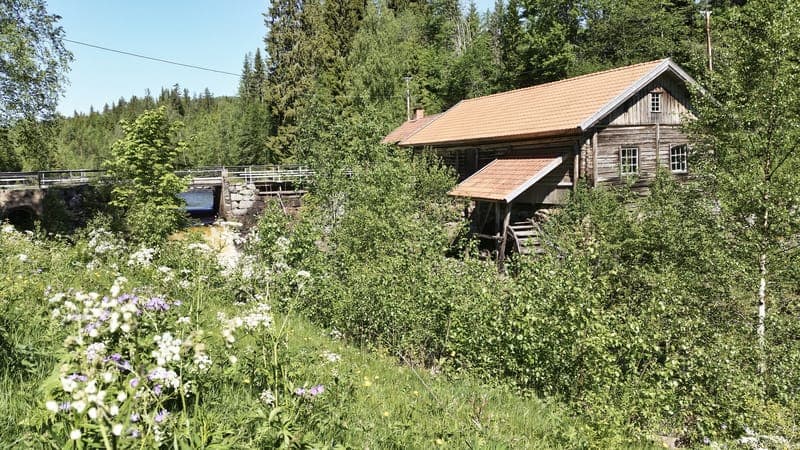
A Historic Powerhouse by the River
In Värmland’s idyllic landscape, where the Röjdån river gently meanders, you'll find Röjdåfors Kvarn – a place where natural power converges with human ingenuity. Since the 17th century, the water's energy here has been carefully channelled to drive machinery, transforming raw materials into necessities. The mill stands today as a silent, yet deeply eloquent, monument to an era when daily life and work were intimately intertwined with the rhythms and conditions of the surrounding nature.
A visit to Röjdåfors Kvarn is like stepping straight into the past. Here, you are met by the melodic rush of water through the turbines, the distinctive scent of aged timber, and the cool, damp air that fills the building, together creating a unique and authentic atmosphere. Through its walls, whispers the story of the miller, whose livelihood was entirely dependent on every rainfall and every snowmelt to provide the local community with freshly ground flour. It is a living reminder of a time when resources were precious and every human effort had a direct, crucial significance for the survival of the community.
This well-preserved mill is more than just an old building; it serves as a poignant lesson in Värmland’s industrial heritage. The region, well-known for its dense forests and abundant waterways, has historically been a breeding ground for innovation and hard work, creating the conditions for communities to flourish. Röjdåfors Kvarn perfectly exemplifies how generations over centuries have utilized the local geography to establish fundamental and vital functions. It is a story of adaptation, of resilience, and of the ability to achieve grand and lasting utility with simple means.
A tranquil stroll along the Röjdån in the mill's vicinity can further deepen one's understanding of the place. The Röjdån, elegantly winding through the landscape, has served as a lifeline for countless generations. It has shaped villages, facilitated transport, and driven innumerable waterwheels that processed everything from timber to grain. Exploring the mill is therefore not just observing a single structure, but experiencing an integrated part of a larger context where nature and culture have interacted and shaped each other over centuries. It is a place that invites reflection, to appreciate both the unstoppable force of nature and the human capacity to wisely manage it.